

Clear Answers and Personalised Care for Blood DisordersHaematology
Our haematology services in Vashi diagnose and manage conditions affecting the blood, bone marrow and lymphatic system. Experienced haematologists and haemato-oncologists combine advanced laboratory testing, day-care therapies and multidisciplinary support for anaemia, bleeding disorders, inherited conditions and blood cancers.
Highlights
When Should You Consult a Haematologist?
Seek a haematology evaluation if you experience or are managing:
Persistent fatigue, weakness or unexplained anaemia
Frequent infections or reduced immunity
A family history of thalassaemia, sickle cell disease or another inherited blood disorder
Easy bruising, prolonged bleeding or recurrent nosebleeds
Swollen lymph nodes or an enlarged spleen
Suspected or diagnosed leukaemia, lymphoma, multiple myeloma or another blood cancer
Abnormal blood test results
Recurrent blood clots or a bleeding disorder
Our ServicesTargeted treatment for common, inherited and complex blood conditions
collaboration between departments

Benign Blood Disorders
Blood Cancer (Haemato-Oncology) Care
Haemoglobinopathy & Genetic Blood Disorder Care
Day Care Infusion & Supportive Therapy
Bone Marrow Evaluation & Laboratory Services
Our Specialists


Facilities & Infrastructure
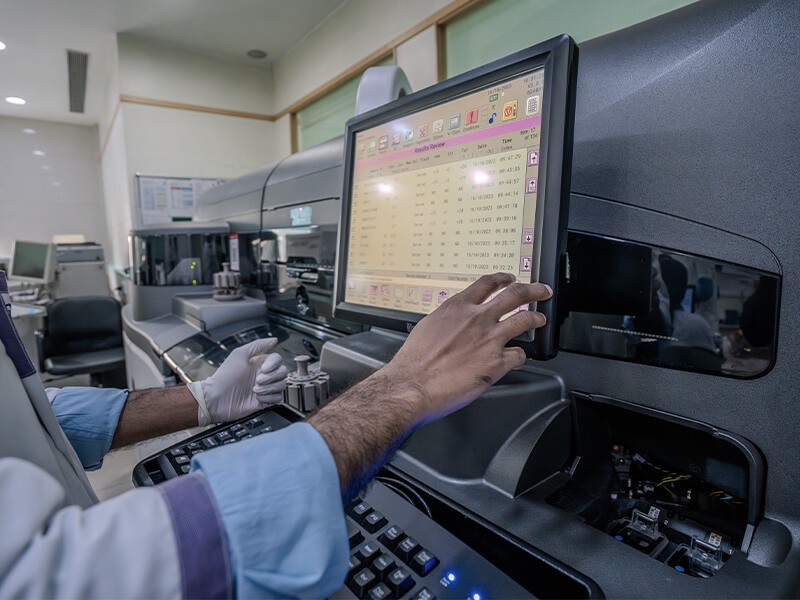
Laboratory precision and monitored treatment in one coordinated setting
Automated Blood Analysis
BIO-RAD Variant HPLC
NABL Accredited Laboratory
Bone Marrow Testing
Transfusion Support
Day-Care Treatment Facility
Patient Care & Follow-Up
Comprehensive Evaluation
Personalised Treatment
Multidisciplinary Decisions
Care Across Settings
Treatment Safety
Long-Term Blood Health


FAQs
What is a bone marrow test?
This is a quick (about 15 minutes) and simple procedure which can be carried out in the outpatient clinic to help with diagnosis of certain blood disorders, and sometimes other disorders. Local anaesthetic is given to numb an area of skin usually over the pelvis (just above the buttock) and a needle is used to take a small sample of bone marrow. The procedure usually only takes about 15 minutes and the results are usually available in about three days to ten days, sooner for some tests.
When is bone marrow transplant done?
Bone marrow transplant can be autologous (patient receives his own stem cells) or allogenic (patent receives stem cells from a donor). Autologous transplant is mostly done for multiple Myeloma and Lymphomas. Allogenic transplant is done for leukemias, bone marrow failure disorders, Thalassemia and primary immunodeficiency etc.
I have iron deficiency. What food should I take to improve it?
What are the symptoms of Haematological Cancer?
The symptoms of haematological illnesses can be many and varied. Such symptoms may include unusual bleeding or infection, fatigue, shortness of breath, bone pain, enlargement of lymph glands, weight loss, night sweats and generally feeling unwell or run down.